Porsche 2D Illustrator
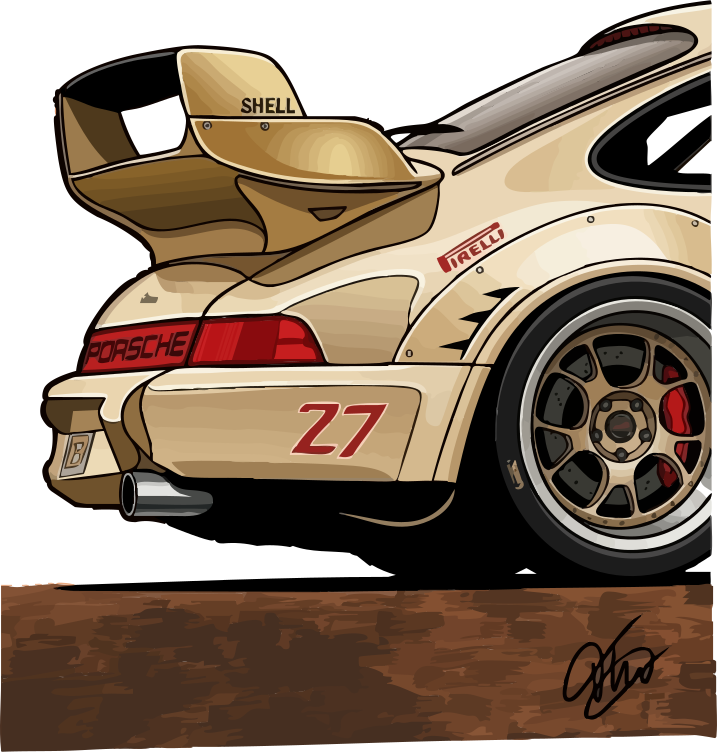
A stylized 2D illustration of a Porsche sports car created in Adobe Illustrator. The project explores automotive illustration through clean vector shapes, layered shading, and detailed elements that highlight the car’s iconic design and performance aesthetics.
Illustrator
2D Animation
Some machines deserve to be drawn by hand. Every line a decision. Every curve a tribute.®
Precision in Every Path
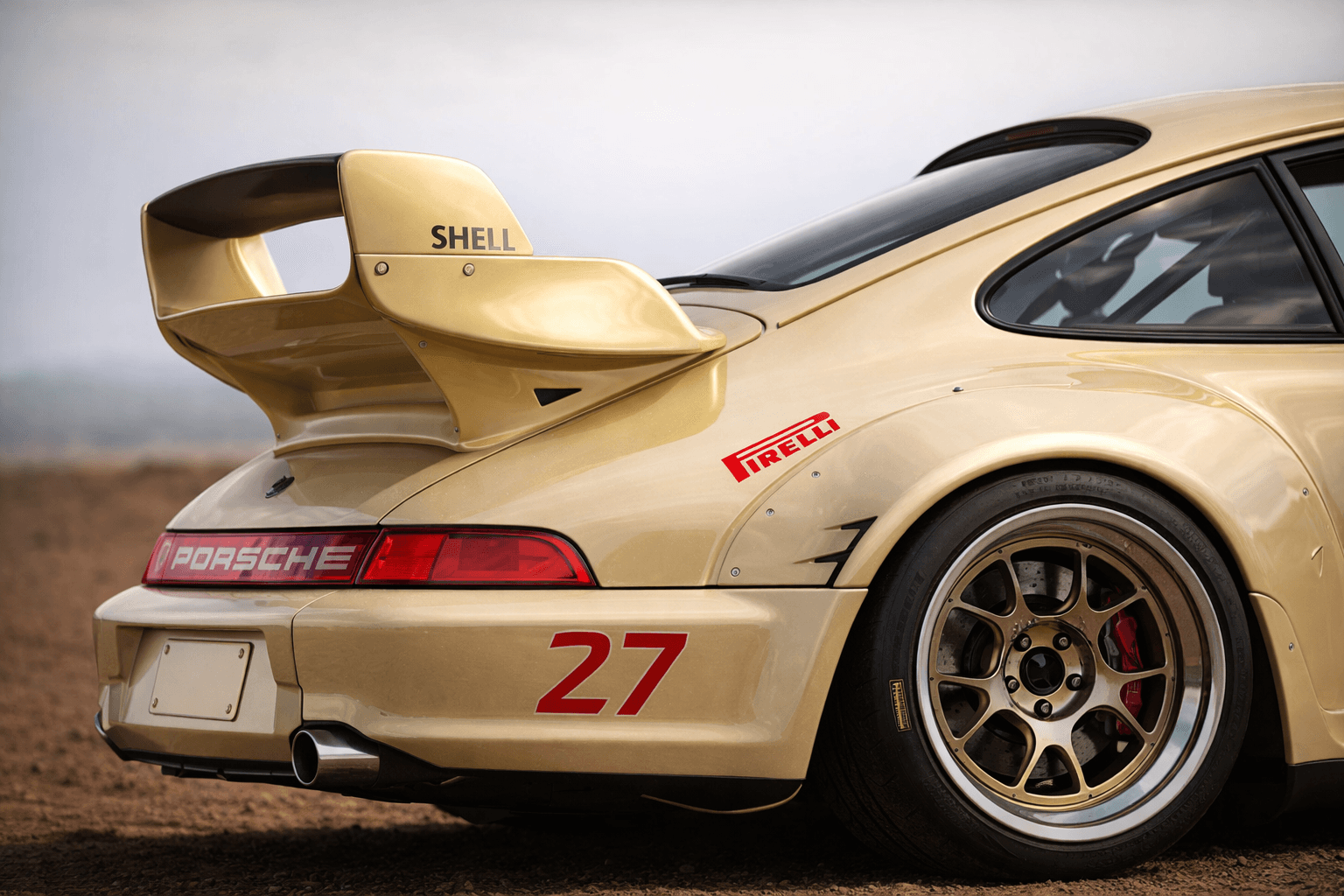
This illustration began as a pencil study of the Porsche 930 RWB, one of the most iconic wide-body builds in automotive history. Understanding the car's proportions and mechanical character before touching Illustrator was non-negotiable. The sketch phase wasn't a step in the process. It was the foundation of every vector decision that followed.
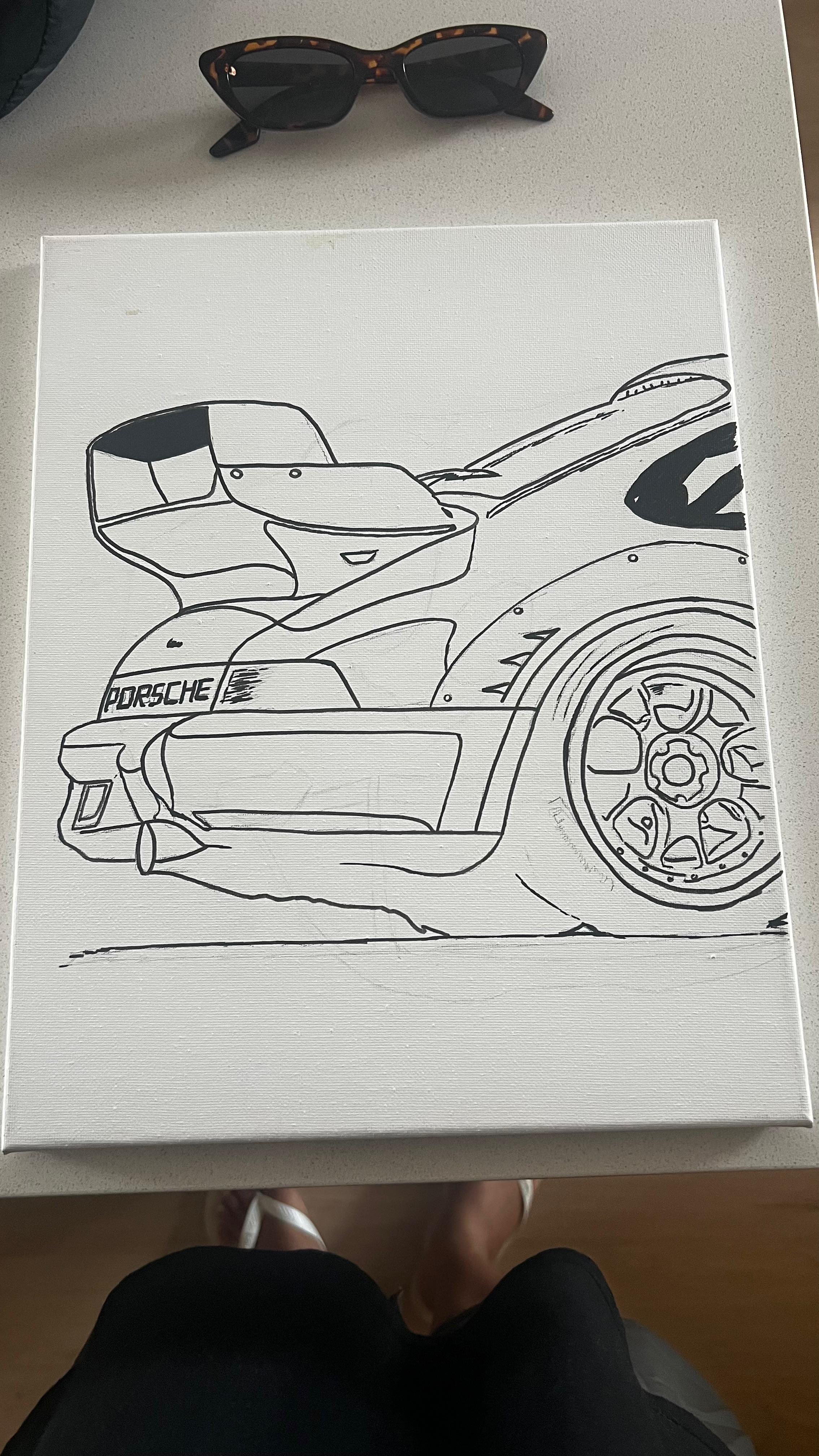
The same car. Two moments in the same process.
On the left: the hand study with colour blocking added in Photoshop testing tonal values, shadow placement and the warmth of the sandy base tone before committing to vector.
On the right: the illustration mid-build in Illustrator, with body panels roughed in and the shading structure beginning to take shape. At this stage the priority was silhouette accuracy and layer organisation the detail comes after the foundation is solid.
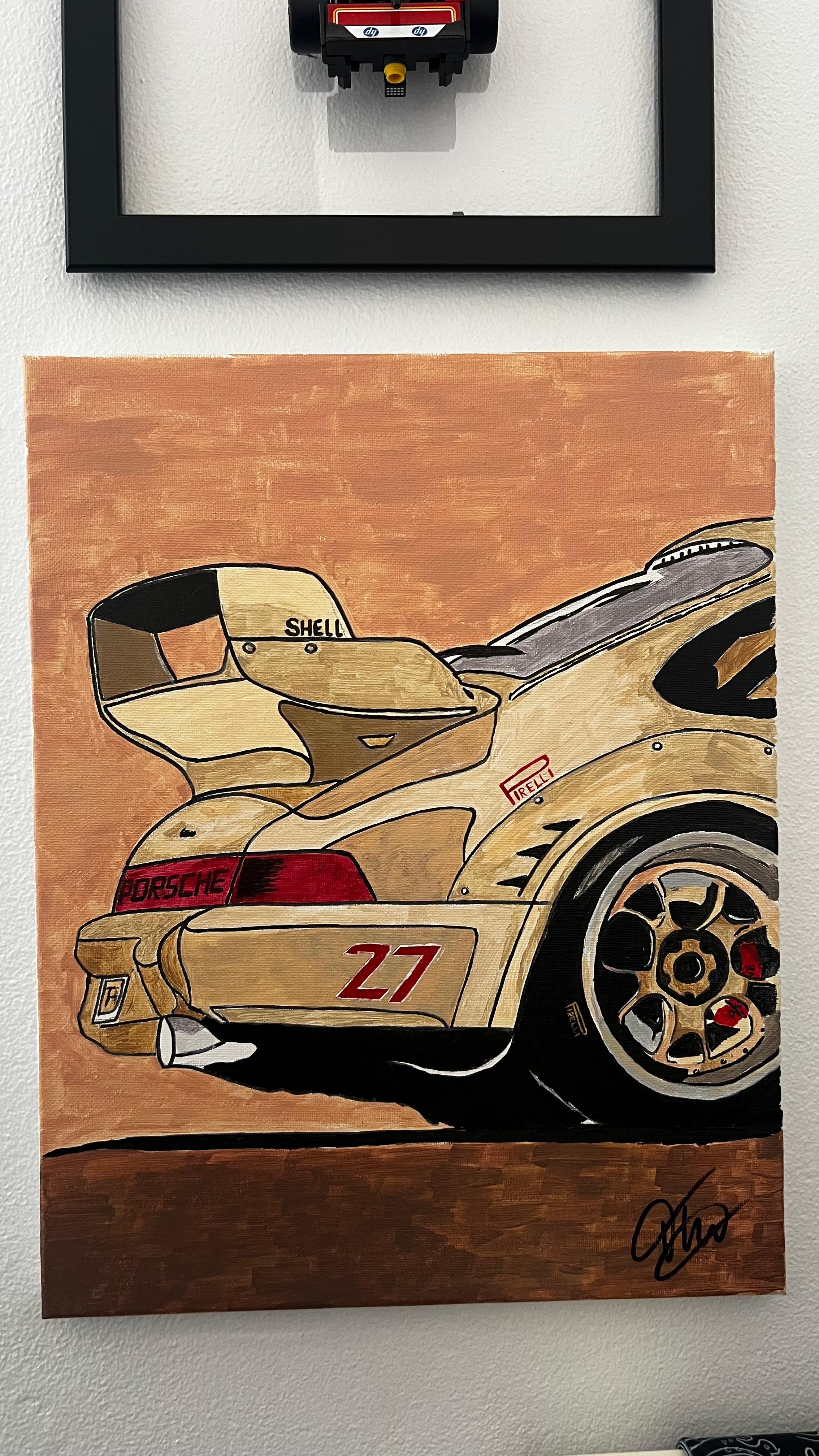
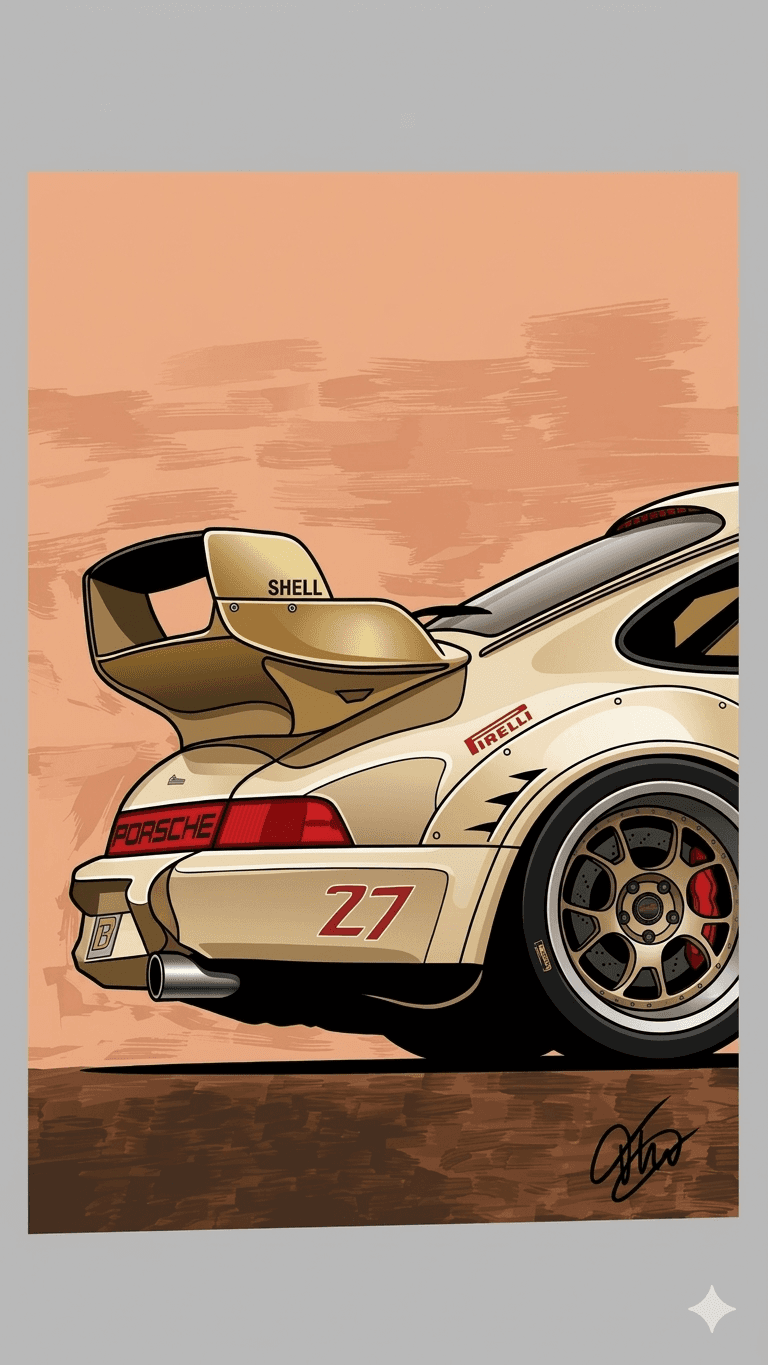
The final piece where every vector earns its place.
This is the illustration at full resolution every panel, every badge, every shadow built as an individual vector shape in Adobe Illustrator. The sandy beige of the RWB body was constructed using layered flat tones rather than gradients, giving the piece a graphic quality that holds at any size. The red accents brake calipers, number 27, Pirelli lettering were treated as deliberate punctuation against the neutral base, drawing the eye through the composition without competing with the line work.
The wheel was the most technically demanding element: concentric rings, spoke geometry and the brake disc all built from scratch using the pen tool and rotational symmetry. Getting the depth of the rim correct while keeping it readable as flat vector required multiple iterations.
Built for scale this illustration works as a print, a decal, a wrap graphic or a large-format wall piece without losing a single line.
More Projects®

Porsche 2D Illustrator
A stylized 2D illustration of a Porsche sports car created in Adobe Illustrator. The project explores automotive illustration through clean vector shapes, layered shading, and detailed elements that highlight the car’s iconic design and performance aesthetics.
Illustrator
2D Animation
Some machines deserve to be drawn by hand. Every line a decision. Every curve a tribute.®
Precision in Every Path
This illustration began as a pencil study of the Porsche 930 RWB, one of the most iconic wide-body builds in automotive history. Understanding the car's proportions and mechanical character before touching Illustrator was non-negotiable. The sketch phase wasn't a step in the process. It was the foundation of every vector decision that followed.
The same car. Two moments in the same process.
On the left: the hand study with colour blocking added in Photoshop testing tonal values, shadow placement and the warmth of the sandy base tone before committing to vector.
On the right: the illustration mid-build in Illustrator, with body panels roughed in and the shading structure beginning to take shape. At this stage the priority was silhouette accuracy and layer organisation the detail comes after the foundation is solid.
The final piece where every vector earns its place.
This is the illustration at full resolution every panel, every badge, every shadow built as an individual vector shape in Adobe Illustrator. The sandy beige of the RWB body was constructed using layered flat tones rather than gradients, giving the piece a graphic quality that holds at any size. The red accents brake calipers, number 27, Pirelli lettering were treated as deliberate punctuation against the neutral base, drawing the eye through the composition without competing with the line work.
The wheel was the most technically demanding element: concentric rings, spoke geometry and the brake disc all built from scratch using the pen tool and rotational symmetry. Getting the depth of the rim correct while keeping it readable as flat vector required multiple iterations.
Built for scale this illustration works as a print, a decal, a wrap graphic or a large-format wall piece without losing a single line.
More Projects®
Porsche 2D Illustrator
A stylized 2D illustration of a Porsche sports car created in Adobe Illustrator. The project explores automotive illustration through clean vector shapes, layered shading, and detailed elements that highlight the car’s iconic design and performance aesthetics.
Illustrator
2D Animation
Some machines deserve to be drawn by hand. Every line a decision. Every curve a tribute.®
Precision in Every Path
This illustration began as a pencil study of the Porsche 930 RWB, one of the most iconic wide-body builds in automotive history. Understanding the car's proportions and mechanical character before touching Illustrator was non-negotiable. The sketch phase wasn't a step in the process. It was the foundation of every vector decision that followed.
The same car. Two moments in the same process.
On the left: the hand study with colour blocking added in Photoshop testing tonal values, shadow placement and the warmth of the sandy base tone before committing to vector.
On the right: the illustration mid-build in Illustrator, with body panels roughed in and the shading structure beginning to take shape. At this stage the priority was silhouette accuracy and layer organisation the detail comes after the foundation is solid.
The final piece where every vector earns its place.
This is the illustration at full resolution every panel, every badge, every shadow built as an individual vector shape in Adobe Illustrator. The sandy beige of the RWB body was constructed using layered flat tones rather than gradients, giving the piece a graphic quality that holds at any size. The red accents brake calipers, number 27, Pirelli lettering were treated as deliberate punctuation against the neutral base, drawing the eye through the composition without competing with the line work.
The wheel was the most technically demanding element: concentric rings, spoke geometry and the brake disc all built from scratch using the pen tool and rotational symmetry. Getting the depth of the rim correct while keeping it readable as flat vector required multiple iterations.
Built for scale this illustration works as a print, a decal, a wrap graphic or a large-format wall piece without losing a single line.